Static Electricity and Extensions 2026 – Prevention Guide
Why Hair Extensions Are So Prone to Static Electricity
Static electricity is one of the most common frustrations for anyone wearing extensions through a Finnish winter, when heated indoor air can drop to very low humidity for months at a time. The problem is worse with extensions than with your own hair for a simple reason: the natural oils (sebum) your scalp produces travel down your own strands, but they never reach the full length of attached hair. Without that built-in lubrication, extension fibres dry out faster, lose their charge balance and start to lift, cling and flyaway the moment they rub against clothing, a brush or a wool hat.
What Actually Triggers the Charge
Static builds when friction moves electrons between two surfaces and dry air lets that charge sit on the hair instead of dissipating. Knowing the specific triggers makes them easy to avoid.
| Trigger | Why it causes static | How to counter it |
|---|---|---|
| Dry indoor heating | Low humidity stops the charge from draining away | Run a humidifier; aim for a comfortable, non-dry room |
| Synthetic clothing and wool hats | Polyester, acrylic and wool generate friction charge against hair | Choose natural-fibre scarves; line hats with silk or satin |
| Plastic brushes and combs | Plastic bristles transfer charge with every stroke | Switch to a wooden brush or natural boar-bristle brush |
| Over-washing | Frequent washing strips the little moisture the lengths hold | Wash less often and always follow with conditioner |
| Cotton pillowcases | Overnight rubbing on cotton roughens the cuticle and charges it | Sleep on a satin or silk pillowcase |
Daily Habits That Keep Static Under Control
Prevention is almost entirely about keeping the hair hydrated and reducing friction. A consistent routine matters far more than any single product.
- Keep moisture in: use a sulfate-free shampoo and a moisturizing conditioner, and add a deep-conditioning mask about once a week. Hydrated hair holds far less static.
- Use a leave-in: smooth a small amount of leave-in conditioner or a couple of drops of lightweight oil through the mid-lengths and ends after washing.
- Brush the right way: work through tangles gently from the ends upward with a wooden or boar-bristle brush, never yanking from the roots where the attachments sit.
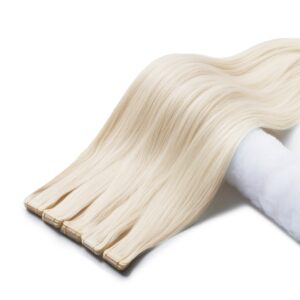
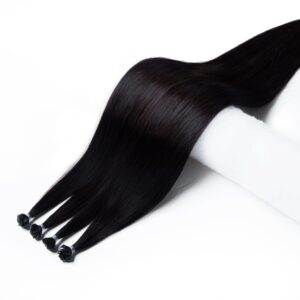
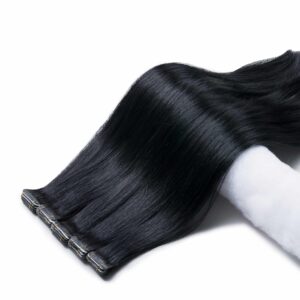
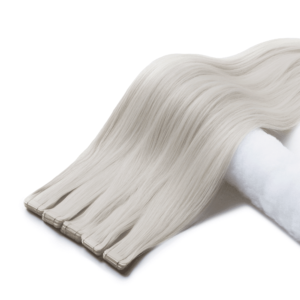
- Protect the bonds: keep up your normal maintenance rhythm so hair stays in good condition – tape extensions are re-taped every 6–8 weeks and keratin (sinetti) bonds are re-done every 2–3 months as your own hair grows out roughly 1–1.5 cm a month.
- Sleep smart: a loose braid plus a satin pillowcase dramatically cuts the friction that builds up overnight.
Material Choice Makes a Real Difference
The type of hair you wear changes how much static you fight. Synthetic fibre carries a charge easily, cannot be smoothed with heat styling and tends to frizz once it dries out. Remy human hair behaves like your own hair: it tolerates a heat protectant and a low-heat straightener, responds to conditioning treatments and settles far more calmly in dry air. If static is a recurring problem, upgrading to good human hair is often the single biggest fix. ConnectHair offers quality human hair extensions with delivery across Finland in 1–4 business days, so you can match the right material to your climate without a long wait.
Quick Fixes When Static Strikes
When you are already out and the flyaways appear, you can calm them in seconds. Rub a tiny amount of leave-in or hand cream between your palms and lightly skim it over the surface of the hair – never soak it. A quick pass with an anti-static (dryer) sheet over the lengths neutralises the charge instantly, and a small travel-size serum in your bag lets you tame the ends before they tangle. Treat these as touch-ups; the daily hydration routine above is what stops the static returning an hour later.
Frequently Asked Questions
How to prevent static electricity?
Anti-static spray satin pillowcases metal-free comb and humidifier are the most effective. Leave-in conditioner also reduces static.
Why do extensions get more static than natural hair?
Extensions are drier than natural hair since they dont receive scalp moisture. Dry indoor air worsens the situation further.